Newsletter Subscribe
Enter your email address below and subscribe to our newsletter

 ByJohn A
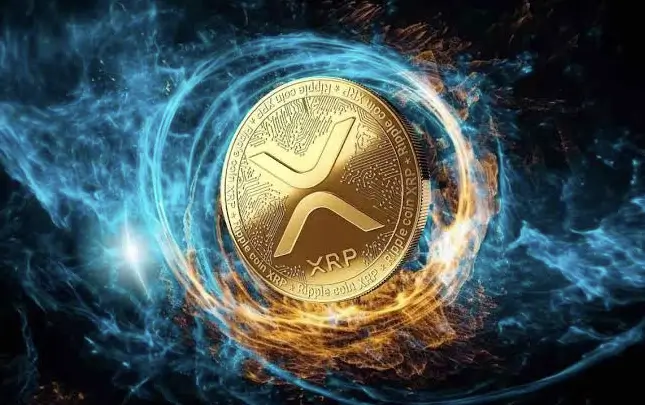
Ripple (XRP) is a digital asset designed to speed up cross-border payments and improve liquidity management within the Ripple ecosystem. It functions as a programmable bridge between currencies, enabling near-instant settlement and reduced pre-funded nostro requirements. In RippleNet, XRP accelerates transfers and enhances visibility across corridors. Its value rests on speed, cost efficiency, and liquidity optimization, while risks include volatility and regulatory clarity. The balance of these factors invites further examination of XRP’s role and potential adoption.
XRP is a digital asset designed to facilitate fast, low-cost cross-border payments and liquidity management within the Ripple ecosystem.
The asset emerged to address settlement speed and cost frictions, positioning itself as a programmable bridge between currencies.
xrp origins reflect a design for liquidity efficiency, while cross border payments are streamlined through value transfer protocols, reducing reliance on correspondent banking networks.
RippleNet integrates XRP as a bridge asset to accelerate cross-border transfers and reduce liquidity risk across correspondent networks.
In practice, XRP enables near-instant settlement concepts by pooling liquidity across corridors, mitigating demand for pre-funded nostro accounts.
This structure supports scalable cross border activity, with liquidity pools enhancing capital efficiency, transparency, and predictable settlement windows for participating banks and payment providers.
How does XRP execute settlement, maintain consensus, and manage fees in practice? The protocol relies on a fixed-set consensus: validators confirm transactions, achieving near-instant settlement across the network. Settlement mechanics emphasize finality within seconds, not hours. The fee structure is minimal and stability-driven, designed to deter spam while preserving throughput. This model prioritizes speed, determinism, and scalable interoperability across participants.
See also: Tokenization of Real-World Assets
Is XRP a viable component for investors and users seeking fast, low-cost cross-border settlements?
The assessment centers on liquidity, volatility, and regulatory clarity.
For investors, key metrics include risk-adjusted return, correlation to equities, and utility-driven demand.
For users, onboarding speed, custody options, and compliance workflows matter.
investor considerations and user onboarding shape overall adoption potential and portfolio risk profiles.
In sum, XRP functions as a liquidity conduit across RippleNet, accelerating cross-border moves while trimming capital needs. Settlement relies on a unique consensus, not traditional mining, and fees vanish into predictable, near-instant transfers. Yet, volatility, liquidity dynamics, and evolving regulation introduce uncertainty, shaping risk-adjusted returns for holders and users. The mechanism promises efficiency gains, but the outcome hinges on adoption, market depth, and policy clarity—an outcome still unfolding, with the next move quietly approaching.